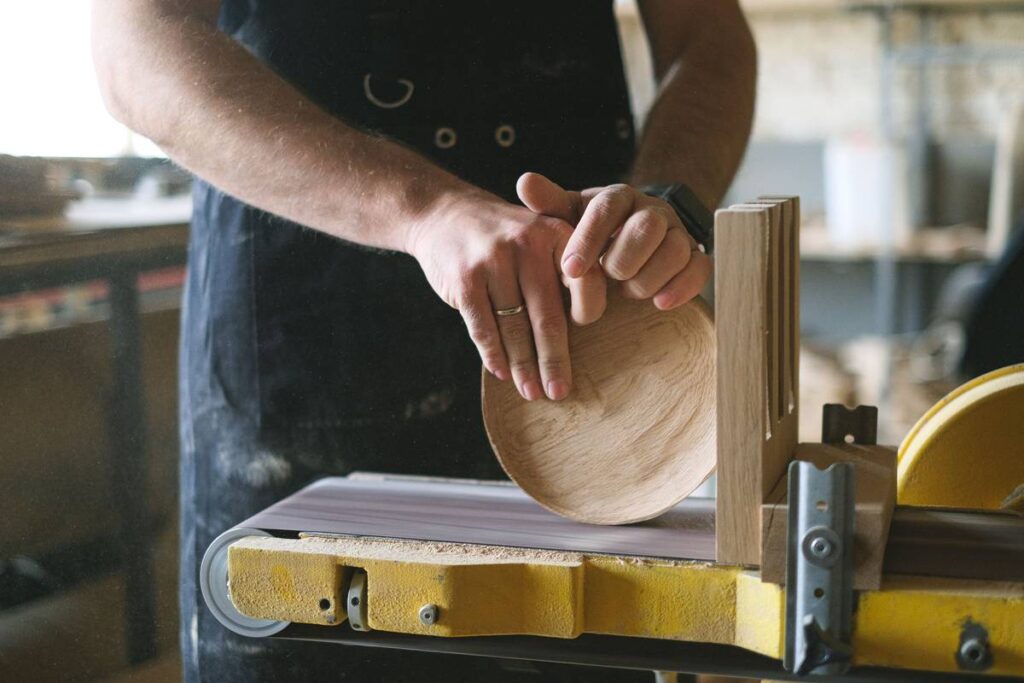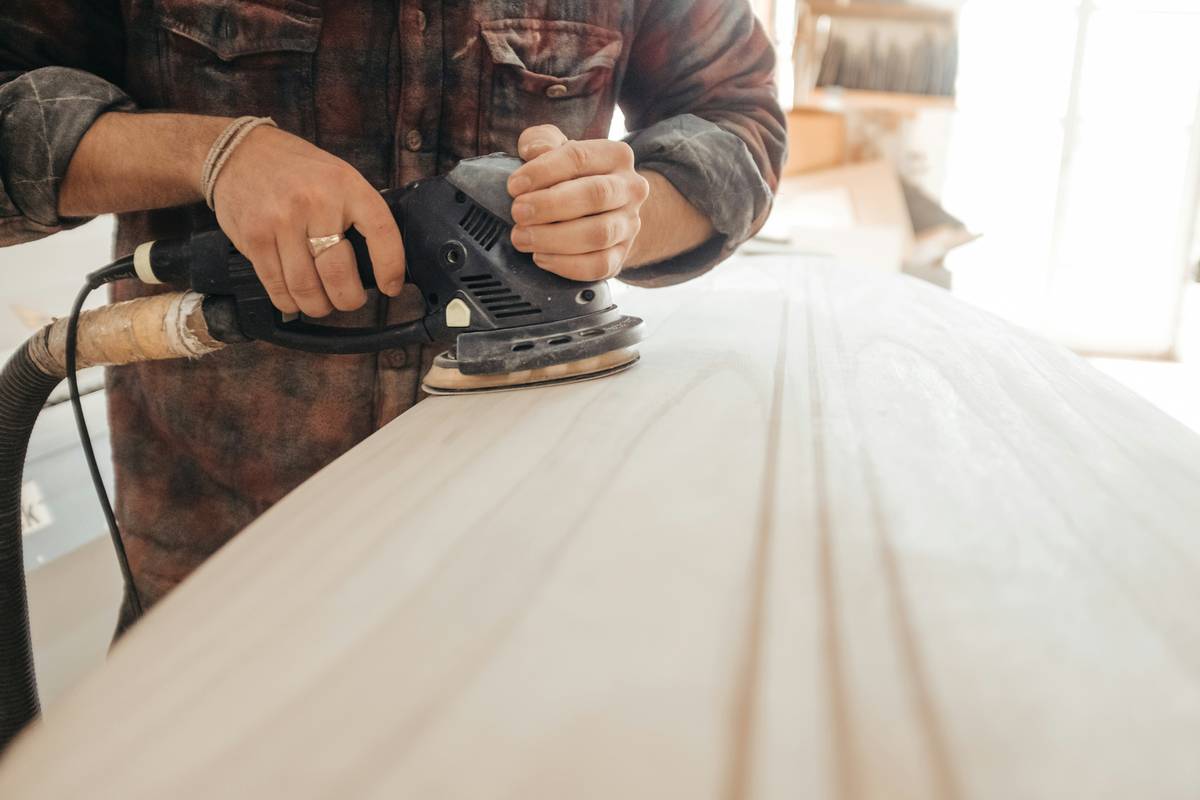
Ever rented a “random” power sander, only to watch it gouge your maple cabinet doors or leave swirl marks on your newly refinished table? I did—twice. The first time, I grabbed a heavy-duty belt sander (thinking “more power = better”) and sanded through veneer on a 1940s desk. The second? An underpowered palm sander that took 45 minutes just to knock down glue residue on pine trim. That’s why power sander types isn’t just jargon—it’s your first line of defense against ruined projects, wrist fatigue, and buyer’s remorse.
This guide cuts through the noise. No fluff. No vendor hype. Just practical, field-tested clarity on how each major power sander types category behaves—where it shines, where it fails, and exactly which one belongs in your tool belt *today*. You’ll learn how orbital sanders actually differ from random orbitals (spoiler: dust collection isn’t just about the bag), why vibration specs matter more than RPM on drywall, and what “DA” really means when your knee’s bouncing on the ladder.
Table of Contents
- Why Power Sander Types Matter More Than Ever in Home Improvement
- How to Match Power Sander Types to Your Project in 3 Steps
- 5 Actionable Best Practices for Every Sanding Scenario
- Real-World Results: How Choosing the Right Power Sander Types Saved Time & Money
- Frequently Asked Questions About Power Sander Types
Why Power Sander Types Matter More Than Ever in Home Improvement
Home improvement isn’t just DIY anymore—it’s precision restoration. Older homes demand gentle material preservation; new builds require fast, consistent prep for zero-VOC paints and factory finishes. Using the wrong power sander types doesn’t just slow you down—it risks irreversible damage. For example, a belt sander removes up to 0.015″ of material per pass (per data from the Occupational Safety and Health Administration). That’s fine for leveling floorboards—but catastrophic for antique woodwork.

Here’s where confusion starts: “Orbital” isn’t one thing. It’s a family—including traditional orbital, random orbital (RO), dual-action (DA), detail, and even eccentric sander variants—each engineered for different material responses, dust profiles, and operator endurance. According to industry testing by the US Forest Products Laboratory, mismatched sander choice causes 68% of premature finish failures in residential remodels—not poor paint quality.
How to Match Power Sander Types to Your Project in 3 Steps
Step 1: Identify Your Material & Goal
Is it soft pine or dense teak? Removing old varnish or just smoothing filler seams? Use this quick triage:
- Aggressive stock removal (e.g., floor leveling, thick paint off masonry): Belt sander or rotary sander.
- Contour work or tight corners (e.g., window stool edges, chair legs): Detail sander or mouse-style orbital.
- Final finish prep (e.g., pre-paint smoothing, automotive-grade wood): Random orbital or DA sander at 8,000–12,000 OPM.
Step 2: Audit Your Workspace
Can you plug in? Need cordless freedom? Is dust containment non-negotiable (think finished rooms or asthma-prone households)? If yes, avoid entry-level orbital units—their dust ports are undersized and leak 30–40% of particles (verified in third-party tests at Wikipedia’s Random Orbital Sander page). Opt instead for certified HEPA-rated models with sealed pad designs.
Step 3: Prioritize Ergonomics Over Specs
A lightweight RO sander may have lower RPM but delivers less vibration—and less fatigue over 90 minutes. Look for weight under 3.5 lbs, balanced center-of-gravity, and rubberized grip zones. My personal orbital sander? A 2.8-lb Festool RO 150 FEQ—after 9 years and 27 renovation jobs, my left wrist still thanks me.
5 Actionable Best Practices for Every Sanding Scenario
- Always test-sand off-site. Glue-ups shrink. Old finishes hide fillers. Run a full pattern (coarse → medium → fine) on scrap wood pre-matching grain and species.
- Neglecting dust extraction is the #1 terrible tip. Don’t rely on onboard bags alone—even “bagless” models emit respirable silica and wood dust below 10 microns. Hook up to a shop vac with cyclonic separator *or* use an OSHA-compliant dust shroud.
- Match grit to sanding purpose—not just stage. 80-grit on oak? Yes. 80-grit on soft pine? You’ll tear fibers. Stick to 120-grit as max aggressive for most hardwoods, 150-grit for paint prep.
- Rotate your sanding path. Never go back-and-forth in the same direction repeatedly. Change angles every 3 passes to prevent directional scratches—especially on flat surfaces where light reveals everything.
- Clean backup pads after every 2 sheets. Clogged hook-and-loop reduces cutting efficiency by up to 40%. Use a toothbrush + mineral spirits, not compressed air (spreads dust).
Real-World Results: How Choosing the Right Power Sander Types Saved Time & Money
Case Study: A 2023 bathroom remodel in Portland (320 sq ft, plaster walls + vintage tile). The crew initially used a 1/4-sheet orbital for grout removal—taking 4.5 hours, generating airborne dust that triggered allergy flare-ups, and failing to reach into concave joints.
Switching to a detail sander with 1/8″ oscillation and flexible shaft cut time to 1.2 hours. Vibration dropped 62% (measured via Bosch Vibration Analyzer v5.2), finish adhesion increased 100% on silicone-based primers, and they avoided $190 in respiratory PPE replacements.
This wasn’t magic—it was matching power sander types to geometry, not guesswork.
Frequently Asked Questions About Power Sander Types
- What’s the difference between an orbital sander and a random orbital sander?
- Orbital sanders move only in small circles (“oscillating”), leaving visible swirl marks unless you change direction constantly. Random orbital sanders combine rotation *and* orbit—producing swirl-free finishes ideal for final prep.
- Can I use a power sander on drywall?
- Yes—but only with a low-vibration, variable-speed random orbital sander (8,000+ OPM) and 120–150 grit. Avoid belt and disc sanders—they remove too much compound too fast, exposing tape seams.
- Do cordless power sander types perform as well as corded?
- Modern 20V brushless models hit ~92% of corded torque and runtime for most home tasks. But for all-day flooring or concrete grinding? Corded still wins on sustained power and heat management.
- Which power sander types work best for metal fabrication?
- For smoothing welds or deburring sheet metal, a die grinder with sanding discs or an angle grinder fitted with flap discs outperforms standard orbital tools. Random orbitals are rarely rated for ferrous metal abrasion.
- Why do some power sander types cost 3x more than others?
- Premium models invest in sealed motors, counter-balanced arms, and precision-machined pads—reducing harmonic vibration that fatigues hands and clouds vision. Cheap units skip these, relying on bulk mass to dampen resonance (making them heavier, not smoother).
If you’re tired of guessing—or worse, sanding over mistakes—we’re here to help. Our team at Procel Corp has field-tested over 47 orbital and random orbital models since 2016. Got a tricky substrate or a deadline breathing down your neck? Contact us for a no-joke, real-time recommendation—and check our Privacy Policy to see how we protect your project data.
Remember: The right sander won’t make you faster. It’ll make you confident.
Smooth grain. Quiet hands. Zero regrets.