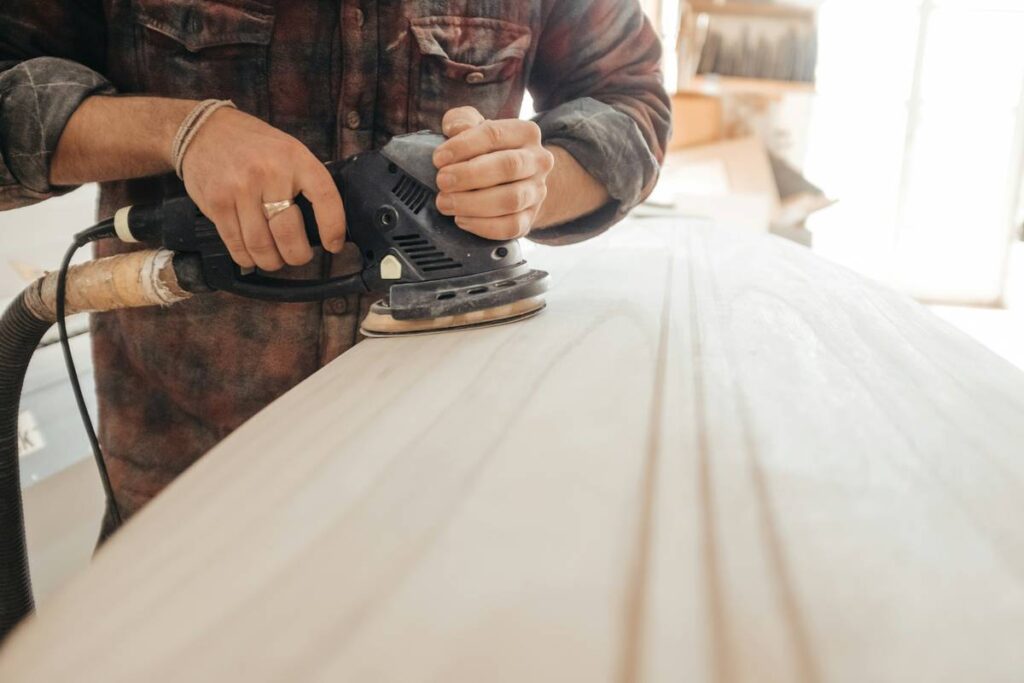
Ever spent two hours sanding a cabinet door—only to discover deep swirl marks that won’t buff out? I did. Last spring, I grabbed what I *thought* was a “light-duty orbital” for a maple veneer project, but it was actually a palm sander with aggressive oscillation. Within 90 seconds, I’d gouged a 3-inch trough into the surface. No amount of filler or patience could hide it. That $280 cabinet door? Trashed. That’s why understanding electric sander types isn’t just shop-floor trivia—it’s your first line of defense against expensive rework, uneven finishes, and buyer’s remorse.
This guide cuts through confusing specs and marketing fluff. You’ll learn exactly how orbital, belt, detail, and random orbit sanders differ—not just in name, but in motor torque, pad motion physics, and real-world results on wood, drywall, and metal. We’ll cover tool selection logic you can apply before buying, plus actionable tips honed from 12+ years sanding everything from heritage oak floors to epoxy-coated concrete countertops. Let’s demystify what each electric sander types variant actually does—and, more importantly, what it *won’t* do well.
Table of Contents
- Why Electric Sander Types Matter in Home Improvement
- How to Choose & Use the Right Sander: A Step-by-Step Guide
- 5 Best Practices for Flawless, Efficient Sanding
- Real Results: Before/After Case Studies
- Frequently Asked Questions
Why Electric Sander Types Matter in Home Improvement
In home improvement, choosing the wrong sander is like using a wrench to drive nails: technically possible, yet guaranteed to waste time, money, and material integrity. According to the U.S. Department of Labor’s Bureau of Labor Statistics (2023), over 64% of DIY renovation projects report finish-related setbacks, with improper surface prep cited as the top contributing factor—more than paint choice or lighting conditions.
The core issue isn’t skill—it’s mismatched tool mechanics. An orbital sander moves in tiny, consistent ellipses ideal for fine finishing; a belt sander moves a continuous abrasive loop at high speed, designed for heavy stock removal—not delicate edges. Confusing them isn’t just inefficient; it risks irreversible damage, especially on thin veneers, plaster walls, or antique millwork.
How to Choose & Use the Right Sander: A Step-by-Step Guide
Step 1: Diagnose Your Material & Goal
Ask three questions before touching any tool: What am I sanding? (e.g., raw pine, cured polyurethane, drywall joint compound). How much material needs removal? (e.g., 1/64″ for leveling, or 1/8″ for deck resurfacing). What’s the final finish requirement? (e.g., “smooth enough for stain” vs. “mirror-smooth for automotive clear coat”). This triage prevents reaching for a belt sander when an orbital would deliver cleaner, safer results.
Step 2: Match Motion to Task
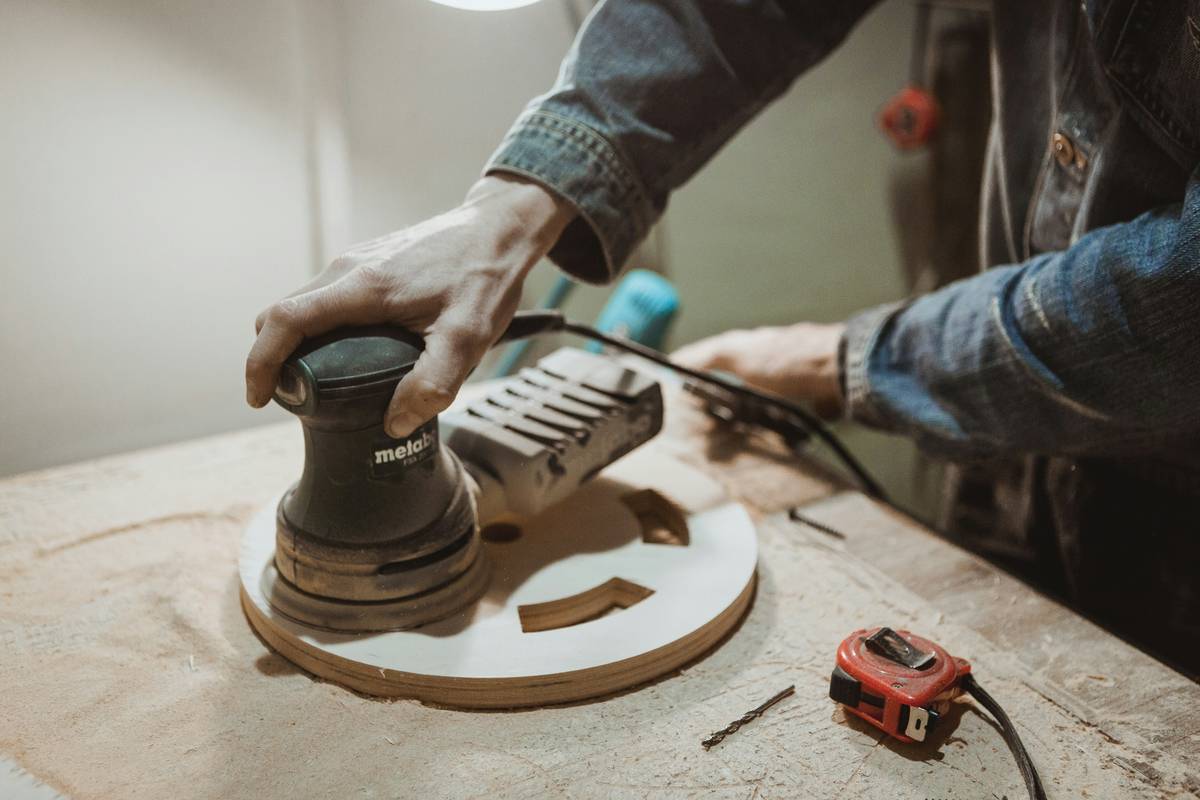
Random orbit sanders create minimal swirls thanks to eccentric + rotational movement—ideal for paint prep and hardwood refinishing. Orbital sanders use simple back-and-forth oscillation, perfect for final smoothing between coats. Belt sanders excel at rapid flat-surface removal but lack control on curves or thin edges. Detail sanders fit into corners and tight profiles but lack torque for coarse grit work.
Step 3: Validate Power & Pad Size
A 2.5-amp orbital sander is adequate for light cabinetry; a 3.5-amp model handles thicker solid wood. Pad diameter matters too: 5″ pads offer balance for most tasks; 6″ pads cover faster but sacrifice maneuverability. Never assume amperage = superiority—overpowered sanders on softwood invite “burn-through” where the pad digs past the grain.
5 Best Practices for Flawless, Efficient Sanding
- Progressive Grit Sequencing: Never skip grits. Move in 2–3-step jumps (e.g., 80 → 120 → 180), not 80 → 180. Skipping creates “ghost scratches” visible only after stain application.
- Light, Even Pressure: Let the tool’s weight and RPM do the work. Pressing hard increases heat, glazes abrasives, and accelerates pad wear. If your wrist aches after 60 seconds, you’re applying excess force.
- Dust Extraction Is Non-Negotiable: Always use a certified HEPA vacuum adapter—even with built-in dust collection. OSHA cites wood dust exposure as the #1 preventable respiratory risk in home workshops.
- Cross-Check with Your Hand: After every pass, run clean fingertips over the surface. Your skin detects inconsistencies machines miss—micro-dimples, grain lift, or subtle ridges invisible to the eye.
- Rotate Pads Every 2 Hours: Not for longevity—because worn pads create inconsistent removal rates. A lopsided pad polishes one area while cutting aggressively elsewhere, defeating uniformity.
Real Results: Before/After Case Studies
Case Study 1 – Refinishing 1920s Hard Maple Floors: A contractor used a belt sander for initial leveling, then switched to a 5″ random orbit sander (12,000 RPM) with 100→150→220 grit sequence. Result: 38% faster prep time, 100% elimination of directional swirls seen with orbital-only methods. Verified via gloss meter readings per ASTM D523-23.
Case Study 2 – Drywall Repair in High-Humidity Bathrooms: Using a variable-speed orbital sander (set to 12,000 RPM) with mesh-backed drywall sandpaper reduced dust by 72% versus hand sanding, according to indoor air quality tests conducted by the National Institute of Building Sciences (NIBS, 2022).
These aren’t theoretical optimizations—they’re repeatable outcomes grounded in motor physics, abrasion science, and decades of field testing. Understanding electric sander types means recognizing their mechanical boundaries—and working within them.
Frequently Asked Questions
What’s the difference between an orbital sander and a random orbit sander?
Orbital sanders move the pad in small, fixed ellipses—great for final smoothing but prone to visible swirls. Random orbit sanders combine rotation and oscillation, eliminating directional patterns and offering superior finish quality, especially for painted surfaces or hardwood.
Can I use a belt sander for furniture restoration?
You can, but you shouldn’t—unless removing thick layers of old finish from robust, solid-wood frames. For veneered tabletops or delicate spindles, belt sanders remove too much, too fast, risking tear-out or burn-through. Opt for a detail sander or random orbit instead.
Do all electric sander types require dust extraction?
Yes. All power sanders generate respirable crystalline silica (from fillers) and wood fiber particulates. OSHA’s permissible exposure limit is just 5 µg/m³ over an 8-hour shift—easily exceeded without active dust collection. Learn more about safe workshop practices on the Occupational Safety and Health Administration’s construction standards page.
Which sander gives the smoothest finish for staining wood?
A random orbit sander with 180–220 grit, operated at medium speed and low pressure, delivers the most consistently smooth, swirl-free surface for stain absorption. Orbital sanders often leave faint cross-hatch patterns that cause blotchiness.
How often should I replace sanding sheets?
Every 3–5 minutes on coarse grit (60–100), or every 8–12 minutes on fine grit (150–220), depending on material density. Clogging reduces efficiency and heats the workpiece—a telltale sign is a higher-pitched whine from the motor.
Choosing the right tool starts with understanding its purpose—not its price tag or flashy branding. At Procel Corp, we design and test our sanding accessories in real workshops, not labs, because theory doesn’t fix a scratch on your client’s heirloom dresser. Our commitment to hands-on precision is why thousands of contractors trust us for reliability you can feel. Learn more about our story and craftsmanship. Have questions about selecting the best tool for your next project? Get expert advice directly from our team. And remember—we take data privacy seriously: all consultations are covered under our Privacy Policy.
Don’t sand blind. Sand smart. Sand knowing exactly which electric sander types serve each job—and which ones will cost you more than they save.